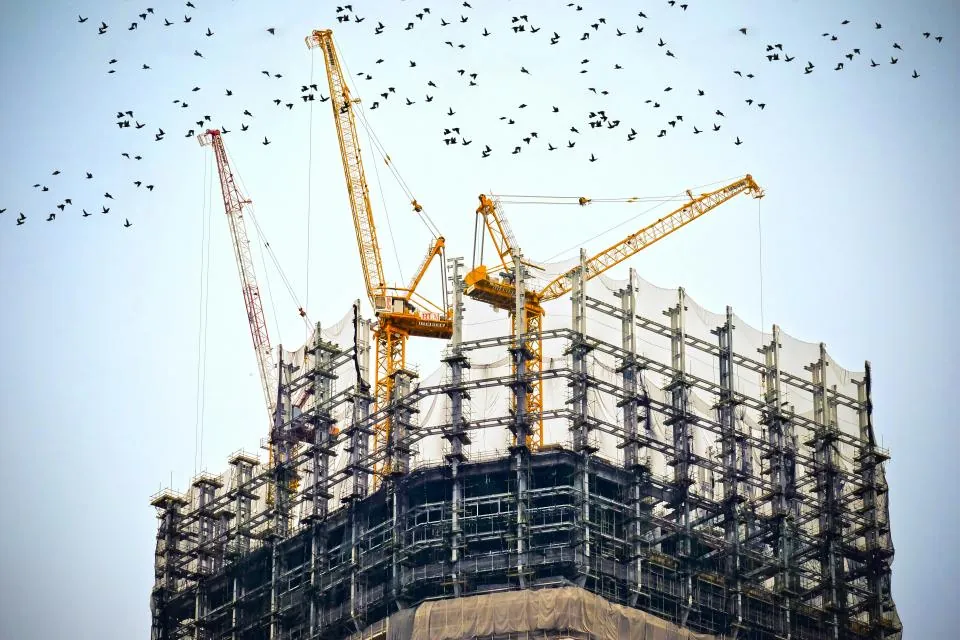
Fort Myers and the wider Lee County market have carried an unusual construction workload since the rebuilding that followed Hurricane Ian, alongside continued residential growth across Southwest Florida. Rebuild and restoration work is administratively heavy in a way new construction is not: insurance documentation, existing-conditions uncertainty, elevation and coastal compliance requirements, and permitting volume that has strained both contractors and jurisdictions.
Accreditations and memberships

Southwest Florida construction has been shaped in recent years by the rebuilding that followed Hurricane Ian, which made landfall in the region in September 2022. Repair, reconstruction, and elevation work has run alongside the residential growth that was already underway across Lee County.
Rebuild work carries a distinctive administrative profile. Insurance claim documentation runs in parallel with construction documentation. Existing conditions are frequently worse than initially assessed, driving change orders. Coastal construction and flood elevation requirements govern what can be repaired versus what must be rebuilt to current standards, and that determination is documentation-driven. Permitting volume rose sharply, which lengthened review times and made application quality matter more - a rejected application in a backlogged jurisdiction is expensive.
Beyond rebuild work, Lee County continues to see substantial residential development, along with the commercial, retail, and medical construction that follows population growth.
Rebuild markets punish weak documentation more than any other kind of construction.
Application quality matters more when review is backlogged. A rejected permit application in a busy jurisdiction does not cost days, it costs weeks. Complete packages at first submission are worth real money here.
Insurance documentation runs parallel to construction documentation. Reconstruction projects require both, and the two have different audiences and different formats.
Reconstruction is change-order work. Conditions revealed during demolition routinely exceed the initial scope. Capturing that promptly, with evidence, is what determines whether it is recovered.
Because the work is performed in your systems, the roles are the same across these markets.
If your situation is specific to how your company works, raise it on the consultation.
Yes. Helping Companies provides remote construction staffing to contractors in Fort Myers and across Florida, working in your systems rather than from a local office.
Reconstruction generates parallel documentation streams - insurance claim records and construction records - plus continuous change documentation as conditions are exposed. All of it is office work that scales with project count.
Not by shortening review times, but by making sure applications are complete and correct at first submission and that comments are responded to immediately. In a backlogged jurisdiction, a rejected application can cost weeks.
Yes, and it is often valuable. Owners who are not living at the property rely entirely on updates and photo documentation, which a dedicated assistant delivers more consistently than a contractor moving between sites.
No. Helping Companies provides remote staffing and does not operate an office in Fort Myers. Support is delivered remotely.
Traditional construction staffing agencies place trade labour and field personnel. Helping Companies places remote office and back-office staff - estimating, coordination, administration, and accounting support.
Schedule a consultation to review your permit and documentation process and where remote support would keep your rebuild projects moving.