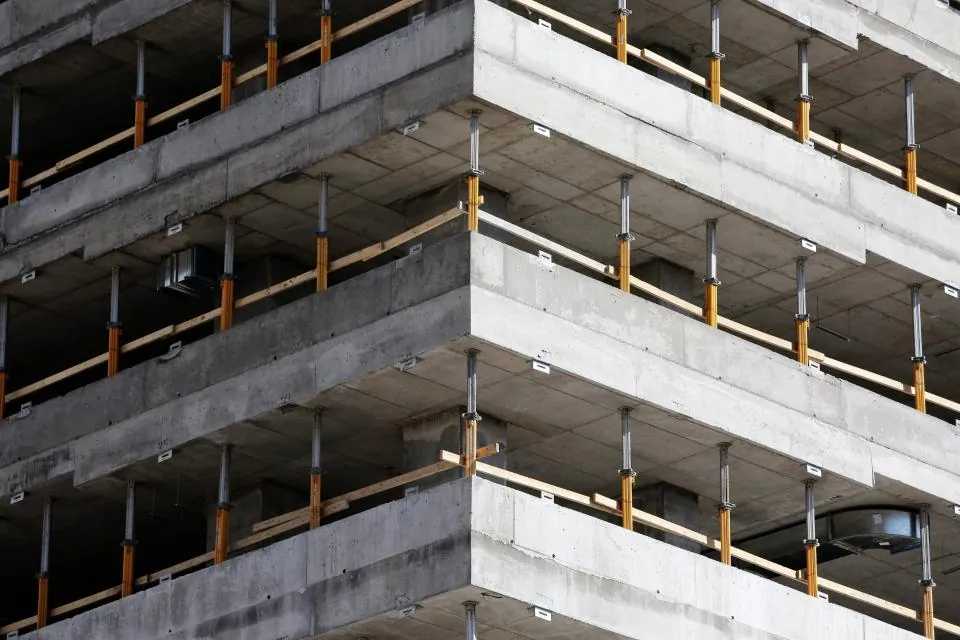
Dallas construction is driven substantially by corporate activity: office and campus development, tenant improvement following relocations, and the retail, multifamily, and residential construction that follows employment growth. It also sits inside a Metroplex made up of a large number of municipalities, each running its own permitting. Corporate clients bring formal procurement and documentation expectations that lean contracting offices feel immediately.
Accreditations and memberships



Dallas has drawn sustained corporate relocation and expansion activity, producing office, campus, and tenant improvement construction alongside the retail, multifamily, and residential development that follows employment growth. Logistics and distribution construction is substantial across the wider Dallas-Fort Worth area, supported by highway, rail, and airport infrastructure.
The Dallas-Fort Worth Metroplex comprises a large number of separate municipalities across several counties, each administering its own permitting and development review. Contractors working across the Metroplex manage a considerable number of distinct processes, and the practical effect is that jurisdiction knowledge is a competitive asset.
Corporate and institutional clients also change the administrative profile of work: formal procurement, qualifications-based selection on a meaningful share of projects, strict billing review, and enforced compliance documentation.
Corporate clients and jurisdictional fragmentation are the two administrative realities of this market.
Qualifications-based work rewards preparation. A maintained qualifications library turns each pursuit into assembly rather than a scramble, which is what makes chasing more corporate work feasible.
Many municipalities, one process owner. Metroplex permitting fragmentation is exactly the problem a dedicated permit coordinator with a jurisdiction reference library is built for.
Billing that survives corporate review. Large clients reject incomplete packages as process. Getting them right first time shortens the gap to payment measurably.
Because the work is performed in your systems, the roles are the same across these markets.
If your situation is specific to how your company works, raise it on the consultation.
Yes. Helping Companies provides remote construction staffing to contractors in Dallas and across Texas, working in your systems rather than from a local office.
Traditional construction staffing agencies place trade labour and field personnel on jobsites. Helping Companies places remote office and back-office staff - estimating, coordination, administration, and accounting support.
The Metroplex is made up of a large number of separate municipalities across several counties, each with its own permitting and development review. Contractors working across it manage many distinct processes rather than one.
Yes. Compliance matrices, project narratives, resumes, references, and formatting are document production work, and a maintained qualifications library makes every subsequent pursuit faster.
Dallas is Central Time and Helping Companies is concentrated in Eastern Time, one hour ahead. We support Central Time, and the availability of the professional is confirmed against your working hours before any candidate is presented, so the overlap is agreed rather than assumed. Whether the role is part time or full time, the schedule is set while the position is being defined.
No. Helping Companies provides remote staffing and does not operate an office in Dallas. Support is delivered remotely.
Schedule a consultation to review your commercial pursuits and where documentation support would make you more competitive.