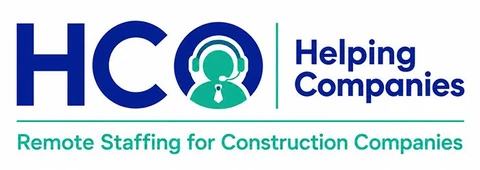
A remote dispatcher schedules and routes your field technicians, keeps the day board accurate as jobs change, and stays in contact with customers and crews so nobody is waiting on a phone call that never comes.
Accreditations and memberships



Helping Companies places remote construction dispatchers who schedule and route crews, manage the day board, handle inbound service calls, keep work orders current and communicate changes to customers and technicians in real time.
Remote dispatch support is a fit when the person running the board is also doing three other jobs.
Service contractors in HVAC, plumbing, electrical and mechanical running daily technician schedules. Restoration contractors handling emergency calls where response time decides whether you win the job. Contractors with a service division where dispatch has been absorbed by an office manager who cannot give it full attention on a busy day.
It is not a fit for work that needs someone physically at the shop handing out parts or keys.
The same role solves a different problem depending on the business it sits in. Find the one that sounds like yours.
| Contractor | Why they hire this role |
|---|---|
| Residential HVAC, plumbing and electrical service | Inbound calls, routing and arrival windows |
| Commercial service contractors | Work orders and response times for facility clients |
| Restoration companies | Emergency intake and crew dispatch around the clock |
| Landscape and property maintenance | Route scheduling and crew changes |
A remote dispatcher owns the board and the communication around it, so your field team keeps moving and your office lead gets their day back.
Platform experience is confirmed against your requirements before any candidate is presented.
The value is billable hours: technicians spend more of the day on jobs and less of it waiting for the next assignment.
The engagement starts from how your board actually runs and who needs to know what, not from a generic dispatch description.
We review your daily call volume, crew size, service area and the platform your board runs in.
We agree a written scope: what the dispatcher decides alone, what gets escalated, the hours covered and how emergencies are handled.
We present pre-screened dispatchers matched to the defined role, and you interview and choose the professional who fits your team.
Platform and phone access are set up, the first weeks are shadowed against your existing process, and autonomy expands as confidence builds.
Drag the sliders to estimate what the admin work this role takes on is costing your company today.
Estimates only. They assume a blended rate of $17 per hour for the remote professional, and that about 10% of the work stays with your team for direction and review. Your free consultation includes an exact quote for your scope.
Hours freed up per week
38 hrs/week
Estimated weekly saving
$630/week
Estimated annual saving
$32,760/year
If something here is specific to how your projects run, raise it on the consultation.
A remote dispatcher schedules and routes field technicians, takes inbound service calls and creates jobs, keeps the day board current as work changes, inserts emergency calls, and keeps customers and crews informed about arrival windows and delays.
Yes. Dispatch is a scheduling and communication role that runs through your software and your phone system, both of which a remote dispatcher works in directly. What it cannot cover is anything requiring physical presence at the shop, such as handing out parts or keys.
Coverage is concentrated in Eastern Time, where our availability is widest. Central, Mountain and Pacific Time are also supported, and in those cases the availability of the professional is confirmed against your working hours before any candidate is presented. Dispatch roles can be part time or full time, and the hours are agreed while the position is being defined.
That is the intended setup, working inside the platform your board already runs in rather than in a parallel schedule. Proficiency in the specific platform the position requires is set as a requirement before recruiting begins, and candidates are screened against it.
Emergency handling is part of the role definition: what counts as an emergency, who has authority to move a scheduled job, and who gets called when the answer is not obvious. After-hours coverage depends on the schedule agreed for the position and is confirmed against the availability of the professional before anyone is presented.
A remote dispatcher works as part of your team, in your systems and on your phone number, so from the customer side it is a consistent point of contact who knows their job. How the role introduces itself, including whether it answers in your company name, is your decision and is agreed while the position is being defined.
Schedule a consultation to talk through your daily call volume, your crew size and the hours you need covered, and where a remote dispatcher would take pressure off the office.