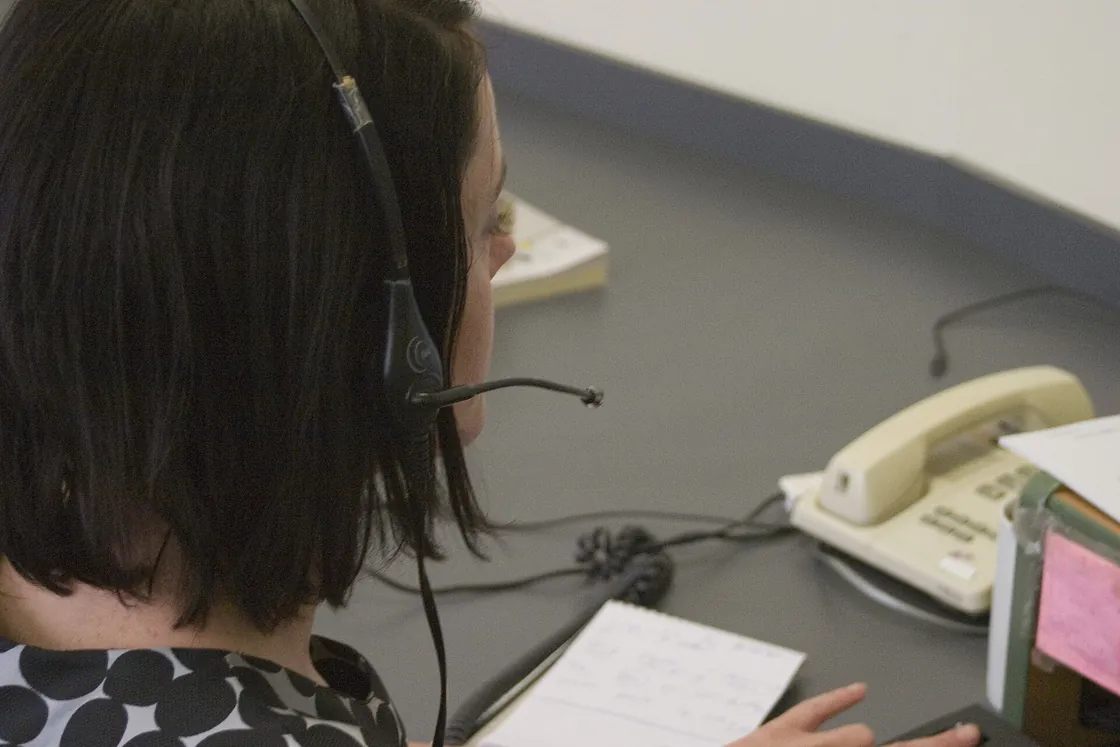
An answering service covers the hours nobody is in the office: it picks up, follows your script and takes a message or flags an emergency. An AI receptionist answers every call instantly and, when it is connected to your scheduling software, can book straightforward jobs. A dedicated customer service representative owns the customer from the first call to the follow-up: booking, rescheduling, confirming, chasing open estimates and keeping records clean.
Most service companies do not need to choose only one. A common setup is a person during business hours and a service or AI tool after hours. The question is which calls each one should handle.
What Does Each Option Actually Do?
Capabilities vary by provider and by how much you set up, but the general pattern looks like this:
| Task | Answering service | AI receptionist | Dedicated CSR |
|---|---|---|---|
| Answer around the clock | Yes | Yes | During agreed hours |
| Take a message | Yes | Yes | Yes |
| Book a job in your software | Some providers, by script | When integrated with your software | Yes |
| Recognize an emergency | By your script | By the rules you set | By judgment, with your dispatcher |
| Reschedule and confirm appointments | Limited | Simple cases | Yes |
| Follow up on open estimates | No | Limited | Yes |
| Return voicemails, web leads and emails | Limited | Limited | Yes |
| Calm an upset customer | By script | Hands off to a person | Yes |
| Keep customer records accurate | No | Partly | Yes |
The difference is ownership. An answering service and an AI tool handle the call in front of them. A CSR is responsible for what happens after it.
How Do the Costs Compare?
The three are priced on different bases, so compare the cost of the calls you actually get:
- Answering services usually bill by the minute or by the call, often in monthly plans with an included allowance and a higher rate for anything over it. A busy season can change the bill a lot.
- AI receptionists are usually a monthly subscription, sometimes with usage limits. Connecting them to your field service software and building the rules takes setup time.
- An in-house CSR earns a median of $21.53 an hour, according to the BLS profile of customer service representatives for May 2025. Benefits add more: private employers paid $11.51 an hour in benefits on top of $25.22 in wages for office and administrative support workers in June 2026, according to the BLS Employer Costs for Employee Compensation survey. At the same proportion, a median CSR costs about $31.36 an hour.
- A dedicated remote CSR through Helping Companies works the hours you set, part time or full time. Our rates start at $17 an hour.
None of these figures includes the most expensive item: a call that does not turn into a booked job. If you know your average ticket and how often a booked call becomes a sale, you can put a number on what a missed or mishandled call costs you.
Where Does an Answering Service Fit Best?
An answering service is strongest as a safety net:
- After hours, weekends and holidays, when the alternative is voicemail
- Overflow during peak hours, when every line is busy
- Emergency screening, with a clear path to your on-call technician
It works best with a tight script: what counts as an emergency, who gets called, and what information to collect. The weak point is the handoff. Someone in your office has to work the overnight messages first thing in the morning, or the service only moves the problem to a different hour.
Where Does an AI Receptionist Fit Best?
An AI receptionist is good at speed and consistency. It never puts a caller on hold, answers common questions the same way every time and, when connected to your scheduling software, can book routine work such as a maintenance visit or a standard service call.
Its limits show up when a call is not routine: a customer with a history, a job that needs a specific technician, a warranty question, a complaint, or a caller who wants a person. Test any AI tool against the calls you actually get, including the awkward ones, before you put it on your main line, and decide in advance when it should hand a call to a person.
When Is a Dedicated CSR Worth It?
A person becomes the better choice when your business-hours calls are steady and the work around them is where the revenue is:
- Bookings depend on judgment: which technician, which parts, which customers on maintenance agreements get priority.
- Open estimates and unsold repair recommendations need follow-up calls.
- Maintenance agreement renewals and seasonal tune-ups need scheduling.
- Your dispatcher is answering phones instead of running the board.
- Customers call back about invoices, warranties and appointment changes.
That is the work of a customer service assistant. If scheduling technicians is the bigger problem, look at a dispatcher instead. Our guide to the difference between a dispatcher and a service coordinator explains how those roles divide the work.
What Does a Combined Setup Look Like?
Many service companies end up with a mix like this:
- Business hours: a dedicated CSR answers, books, confirms and follows up, with the dispatcher handling the schedule.
- After hours: an answering service or AI receptionist answers, screens emergencies by your rules and books routine requests or takes messages.
- Every morning: the CSR works the overnight list first, calling back each message and confirming anything booked automatically.
- Every week: someone reviews missed calls, abandoned calls and unbooked leads, and updates the scripts.
The same rules document should drive all three: service area, emergency definitions, pricing you are willing to quote, and when to escalate. See how we support service contractors, including HVAC and plumbing companies.
How Should You Decide?
Pull a month of call data from your phone system and answer these questions:
- How many calls come in during business hours, and how many after?
- What share of calls need booking, rescheduling or a judgment call, rather than a quick answer?
- How many after-hours calls are true emergencies?
- Who follows up on estimates today, and how consistently?
- How many calls go unanswered or end in voicemail?
If most calls are routine and after hours is the gap, start with a service or an AI tool. If business-hours calls are steady and the follow-up is slipping, start with a person.
Frequently Asked Questions
Is an AI receptionist better than an answering service?
For routine calls and simple bookings, an AI receptionist can be faster and more consistent. For unusual situations and upset customers, a live answering service agent can follow a script with more flexibility. Neither replaces the follow-up work a dedicated CSR does.
Can an answering service book appointments?
Some can, following your script and using the scheduling access you give them. Check whether the provider books directly into your field service software or only sends you the request to confirm.
What does a customer service representative do at an HVAC company?
They answer and book calls, confirm and reschedule appointments, follow up on open estimates, schedule maintenance visits, answer questions about invoices and keep customer records up to date, working alongside the dispatcher.
How much does a customer service representative cost?
The BLS reports a median wage of $21.53 an hour for customer service representatives in May 2025. With benefits at the private-sector average for office and administrative support workers, that is about $31.36 an hour. Helping Companies' rates for a dedicated remote professional start at $17 an hour.
Can a remote CSR answer our company phone line?
Yes. Calls can ring through to the representative on your phone system or its app, and they work in your scheduling software under access you control and can remove at any time.
How quickly can we add someone?
Within a maximum of approximately two weeks we can normally present two to three pre-screened candidates who meet the requirements of the position and are ready to be interviewed. The final hiring time depends mainly on how quickly your own evaluation and decision process moves.